

Becoming a Aircraft Painter
A career as an aircraft painter is a unique and rewarding path within the aviation industry that combines technical skill, creativity, and precision. For students who enjoy working with their hands, have a sharp eye for detail, and also have a bit of artistic flair, this can be an extremely rewarding career path.
The Importance of Aircraft Paint
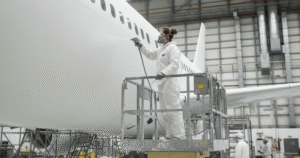
Aircraft painters play a critical role in both the appearance and protection of airplanes, working on everything from small private aircraft to large commercial jets. Their work is not just about aesthetics — it directly impacts safety, durability, and performance. As an aircraft painter, the primary responsibility is preparing and painting aircraft surfaces according to strict aviation standards. This process begins with careful surface preparation, including stripping old paint, repairing minor surface imperfections, sanding, cleaning, and masking sensitive components.
Once the aircraft is properly prepared, specialized coatings and paints are applied using approved techniques and materials. These coatings protect the aircraft from corrosion, extreme temperatures, and environmental damage, while also displaying airline branding, registration numbers, and custom designs. Precision and attention to detail are essential, as even small errors can affect aerodynamics or require costly rework.
A Day in the Life of an Aircraft Painter
The day-to-day career of an aircraft painter can vary widely. Some painters work in maintenance, repair, and overhaul (MRO) facilities, while others are employed by aircraft manufacturers, private aviation companies, or specialty paint shops. Projects can range from repainting an entire aircraft to performing touch-ups or specialty finishes. Many aircraft painters work in teams and follow detailed technical documentation, safety procedures, and quality checks. The job often involves working in large hangars, using protective equipment, and standing or reaching for extended periods, making physical stamina and safety awareness important parts of the role.
Becoming an aircraft painter typically does not require a four-year college degree, making it an accessible and practical career option. Most aircraft painters begin with a high school diploma or GED, followed by specialized training. This training may come from technical schools, vocational programs, apprenticeships, or on-the-job training with an aviation employer. Courses often cover surface preparation, paint chemistry, corrosion control, safety procedures, and the use of specialized equipment. Some employers prefer or require additional certifications, such as hazardous materials handling or aviation safety training, and experience can lead to advancement into lead painter, inspector, or supervisory roles.
Paint Your Path With Support
At Pathways to Aviation, we are here to help students discover and pursue careers in aviation with confidence. As a nonprofit organization, we work to introduce young people to the wide range of aviation careers that exist beyond the cockpit, such as aircraft painting. We partner with schools, industry professionals, and aviation organizations to provide hands-on experiences, career workshops, and mentorship opportunities. Our goal is to remove barriers by connecting students with training resources, guidance, and real-world exposure to aviation careers.
Becoming an aircraft painter can be an exciting and achievable goal for students who enjoy working with their hands, paying attention to detail, and being part of a team that keeps aircraft safe and looking their best. At Pathways to Aviation, we are proud to help open doors to this and many other aviation careers, empowering the next generation to find their place in an industry full of opportunity.